

← Back to work
Case studyClient project · Rebuilt for privacy

A good offer still needs a path that sells it.

A solo coach, a $3,900 program, and one free live training to sell it. This is how the funnel was built so the right people book, show up, and buy.

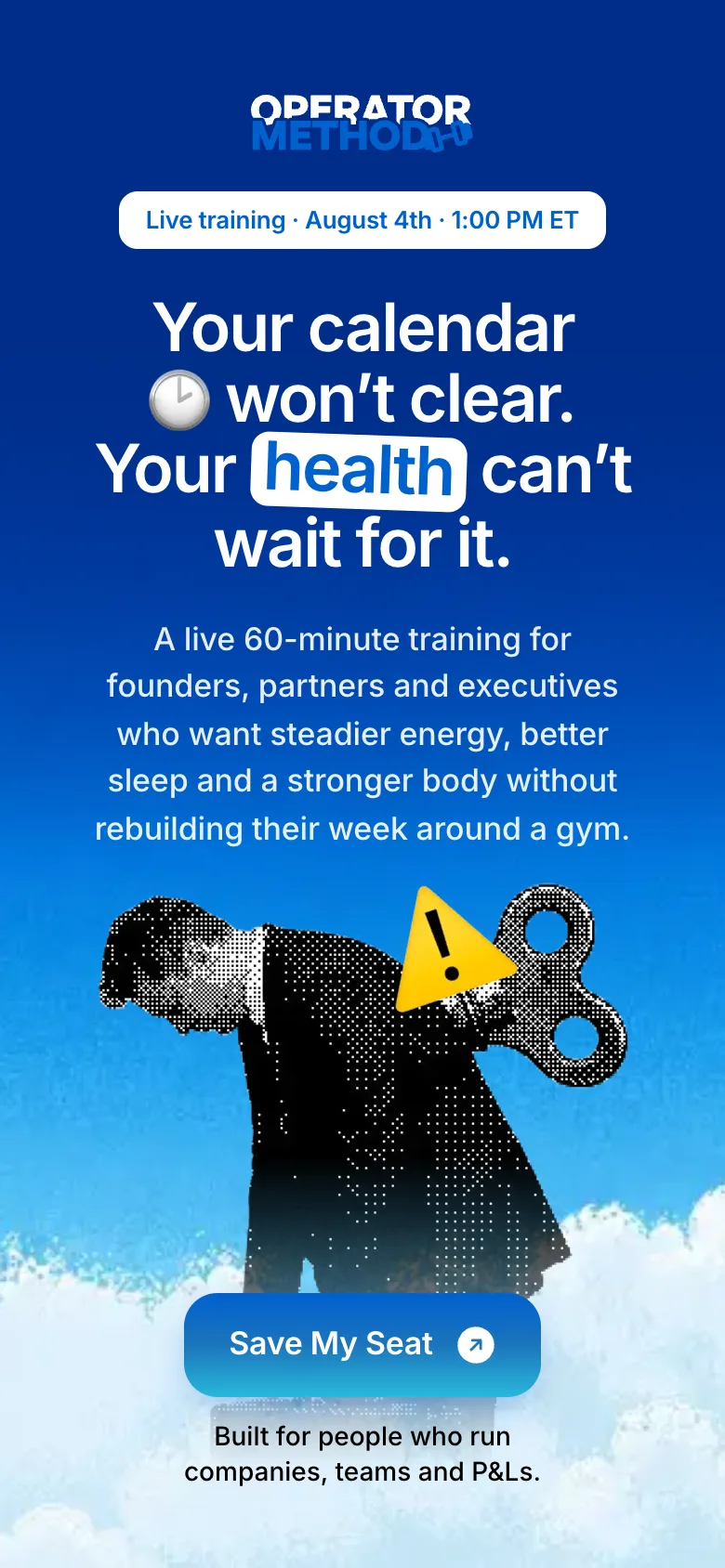
Operator Method opt-in page on a laptop
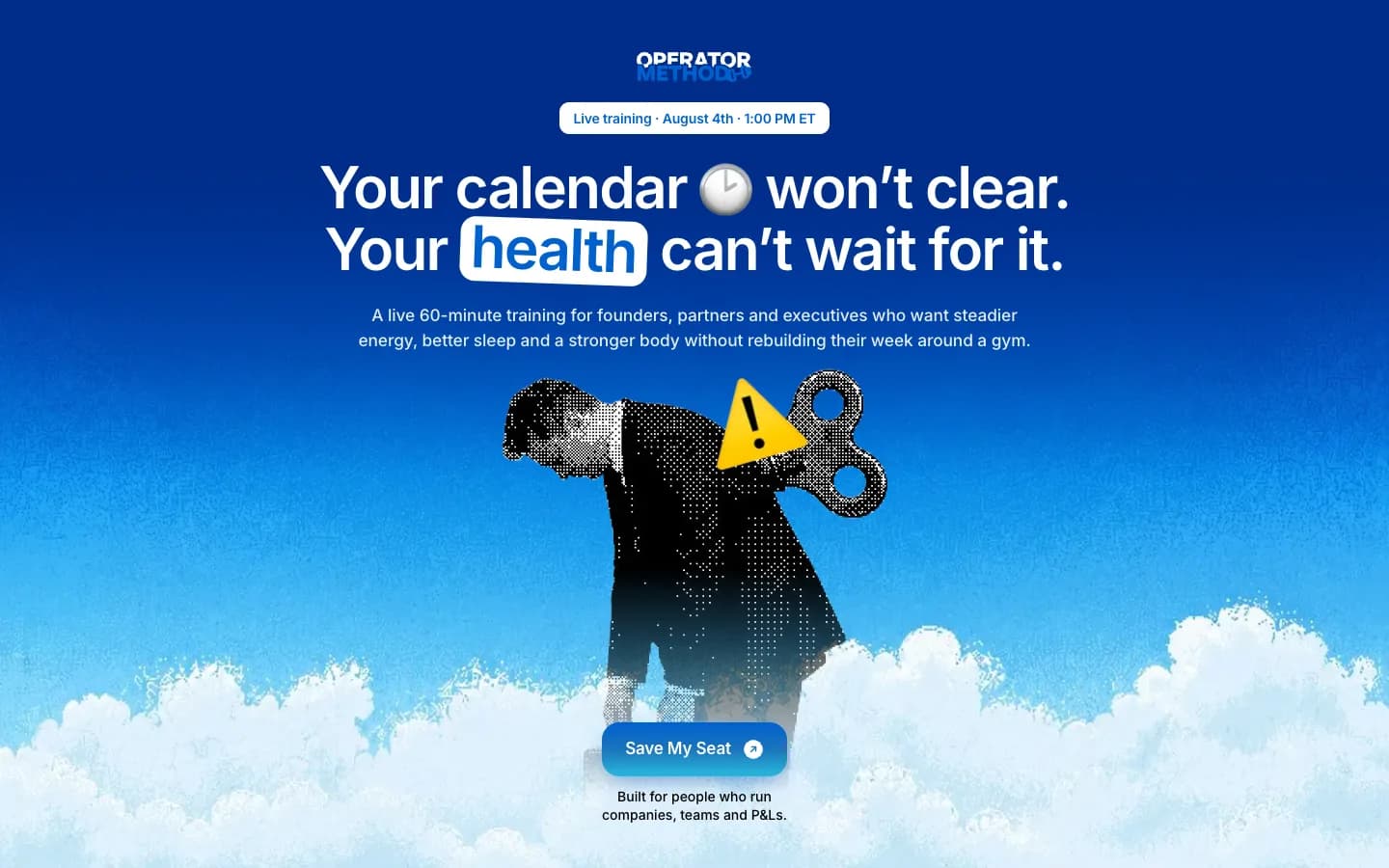
Operator Method opt-in page on a phone
01 · Meet the client

One coach. One offer.
No replay.

A solo coach sells a 16-week health program for $3,900. His buyers run companies, teams and P&Ls, and their calendars are already full. He sells it one way: a free 60-minute live training, no recording.

That is a hard funnel to run. There’s one shot to get the right people in, one hour to earn the sale, and nothing to send to the people who didn’t come.

A note on privacy

The client asked me to keep his project private. So instead of showing it, I rebuilt it around the same offer, with a new brand and new copy.

Nothing here identifies him or his business. The structure and the decisions are the ones he got.

02 · The mission

Leave the offer alone.
Fix the path.

The program didn’t change. The price didn’t change. The training didn’t change. The only thing designed from scratch was the path through them, and it had three jobs.

01

Fill the seats

Get the right people to save a seat, and quietly turn away the wrong ones.

02

Get them in the room

Make them show up live. There's no replay, so a no-show is a lost sale.

03

Make the yes easy

When they're ready, the $3,900 decision should take one page and one button.

03 · Where this kind of funnel leaks

Three places to lose a buyer

A live-training funnel loses people in three predictable spots: the wrong people take the seats, the right people don’t show up, and the ones who do hesitate at the form. Each page was built to close one of them.

Leak 01 · The wrong people

Who gets a seat

Every seat filled by someone who can't buy is a seat a buyer didn't get. The opt-in page qualifies before it sells.

  • The headline names the real problem, a calendar that won't clear, instead of promising willpower.
  • “Sound familiar?” cards describe the buyer's actual week, so the right reader thinks “that's me” before any offer appears.
  • A fit section says plainly who this is for, including the budget, and who it isn't for. Only the “for you” side gets a button.
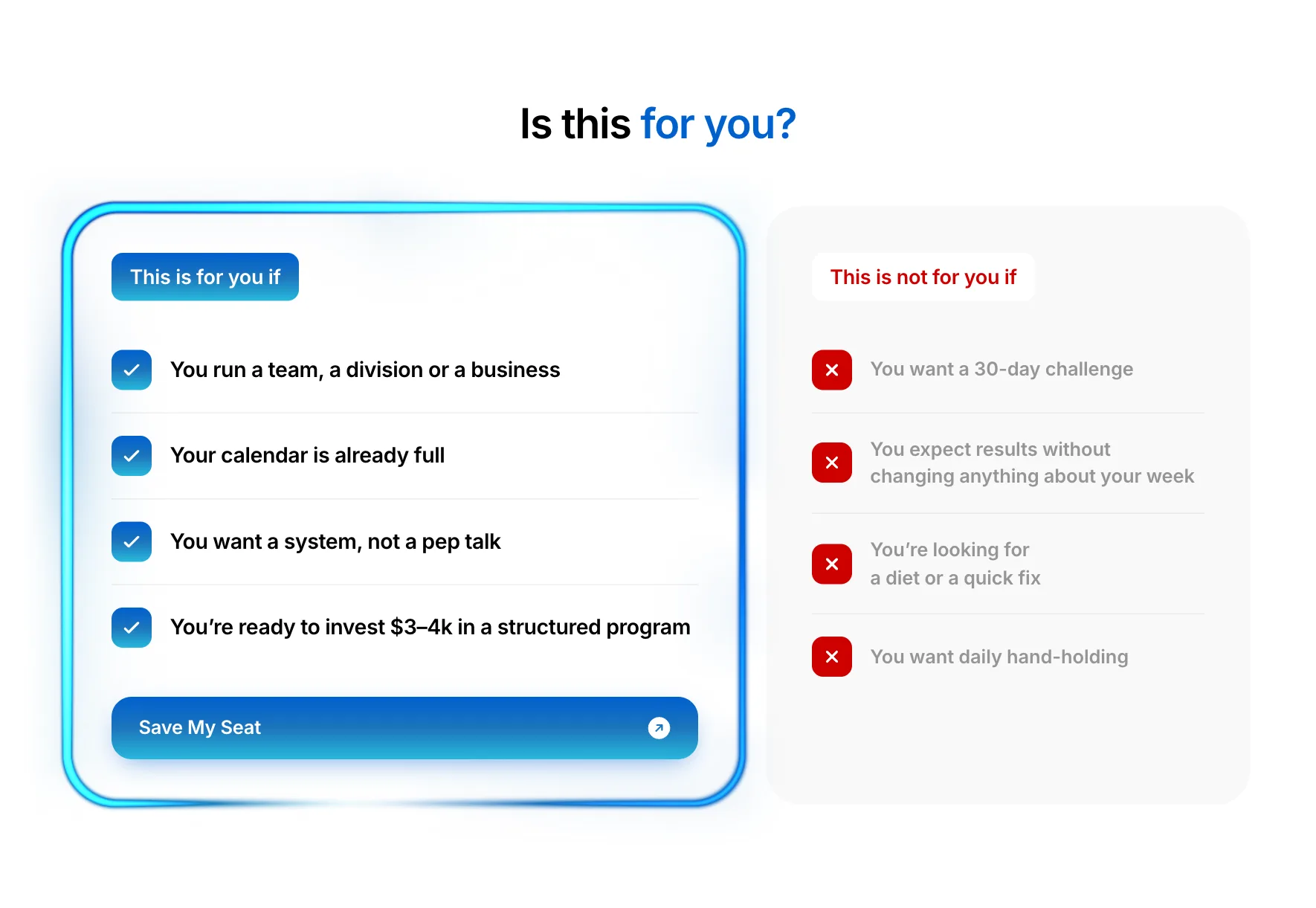
The fit section of the opt-in page on a tablet
Leak 02 · The no-show

Who shows up

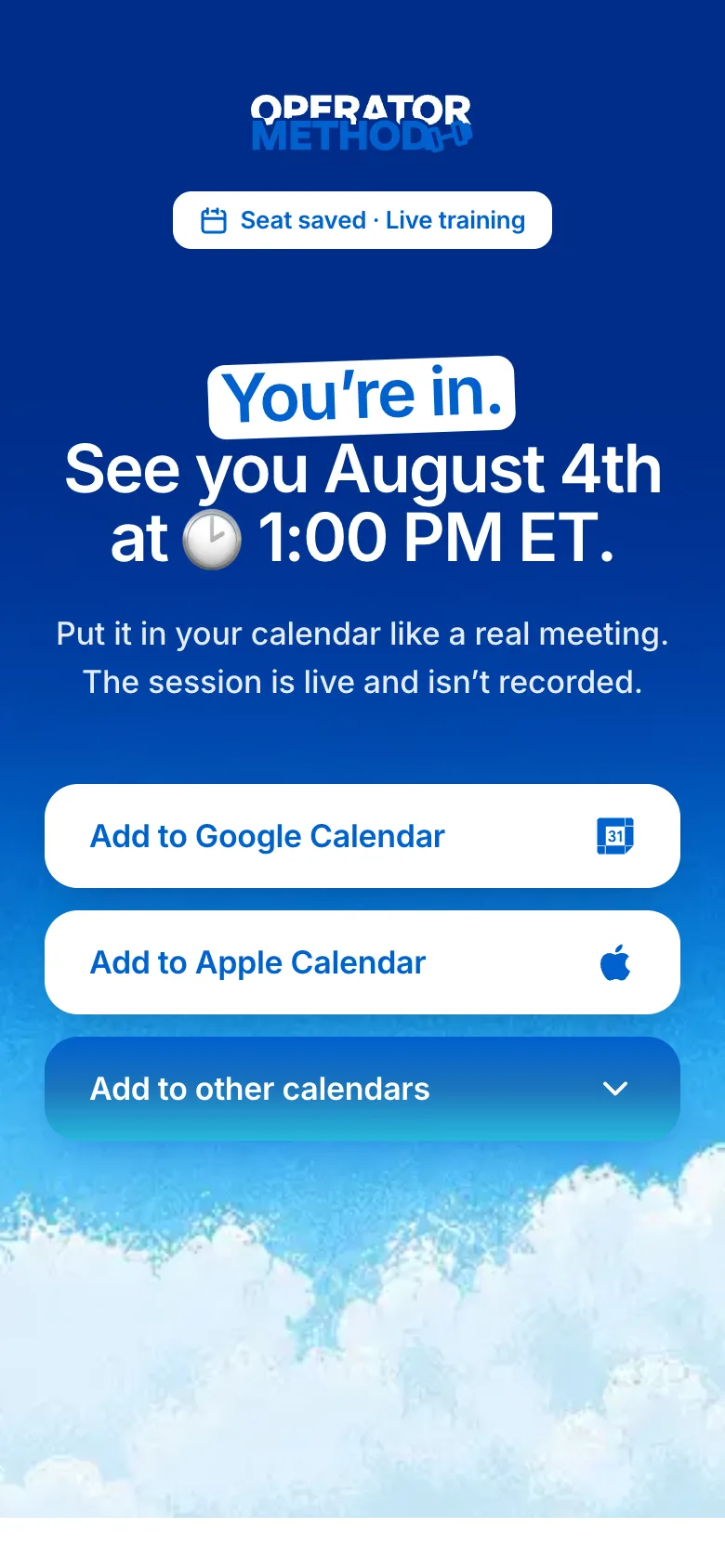
A live training with no replay only sells to the people in the room. So the confirmation page is treated as part of the sale, not a thank-you.

  • One-click buttons for Google, Apple and other calendars, so the session lands in their week like a real meeting.
  • A two-minute prep task: write down your three busiest days and your next trip. A small commitment that gives them a reason to come.
  • A plain list of what happens next: confirmation now, reminders 24 hours and 1 hour before, the join link in every email.
The confirmation page on a phone
Leak 03 · The last step

What happens at checkout

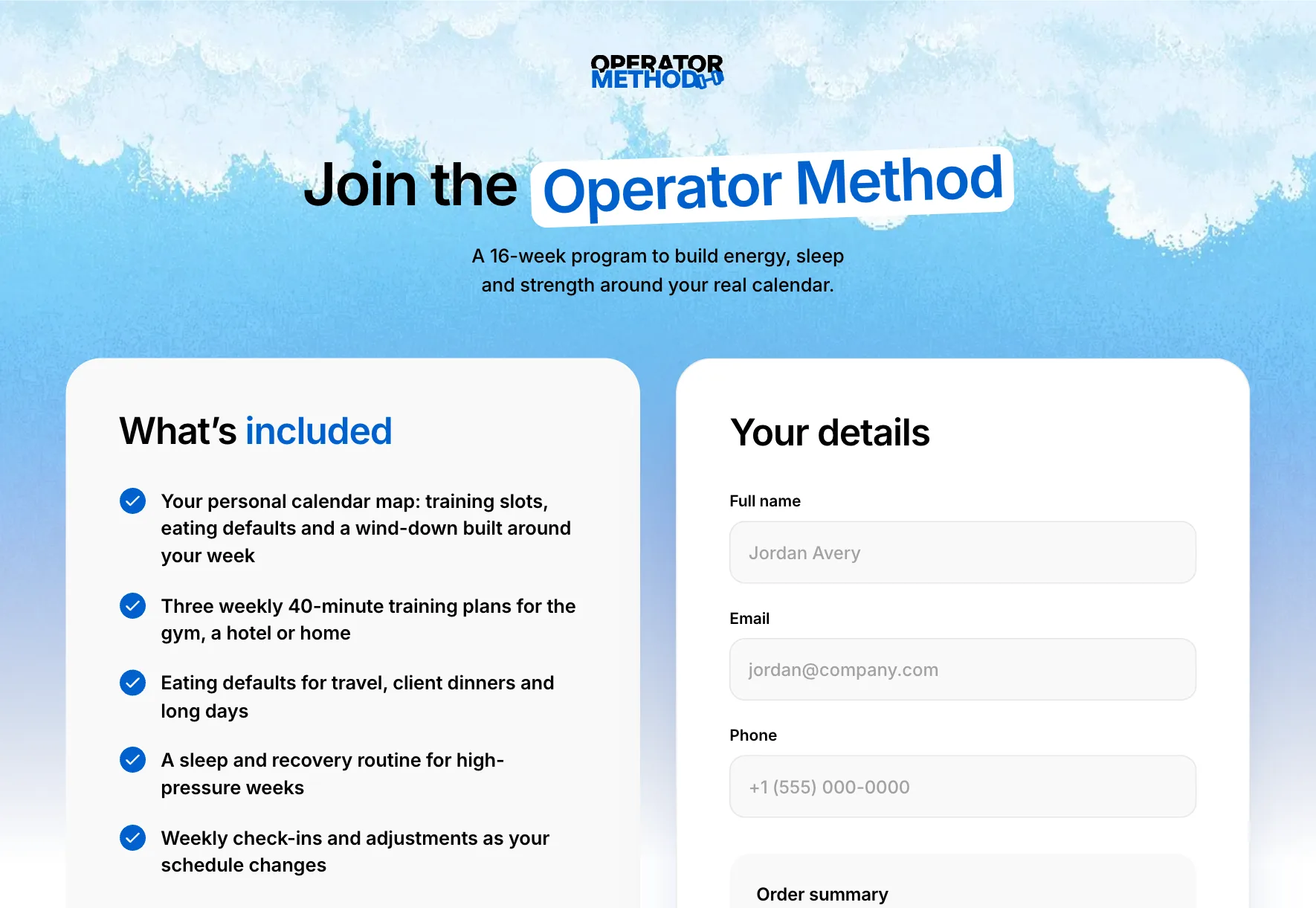
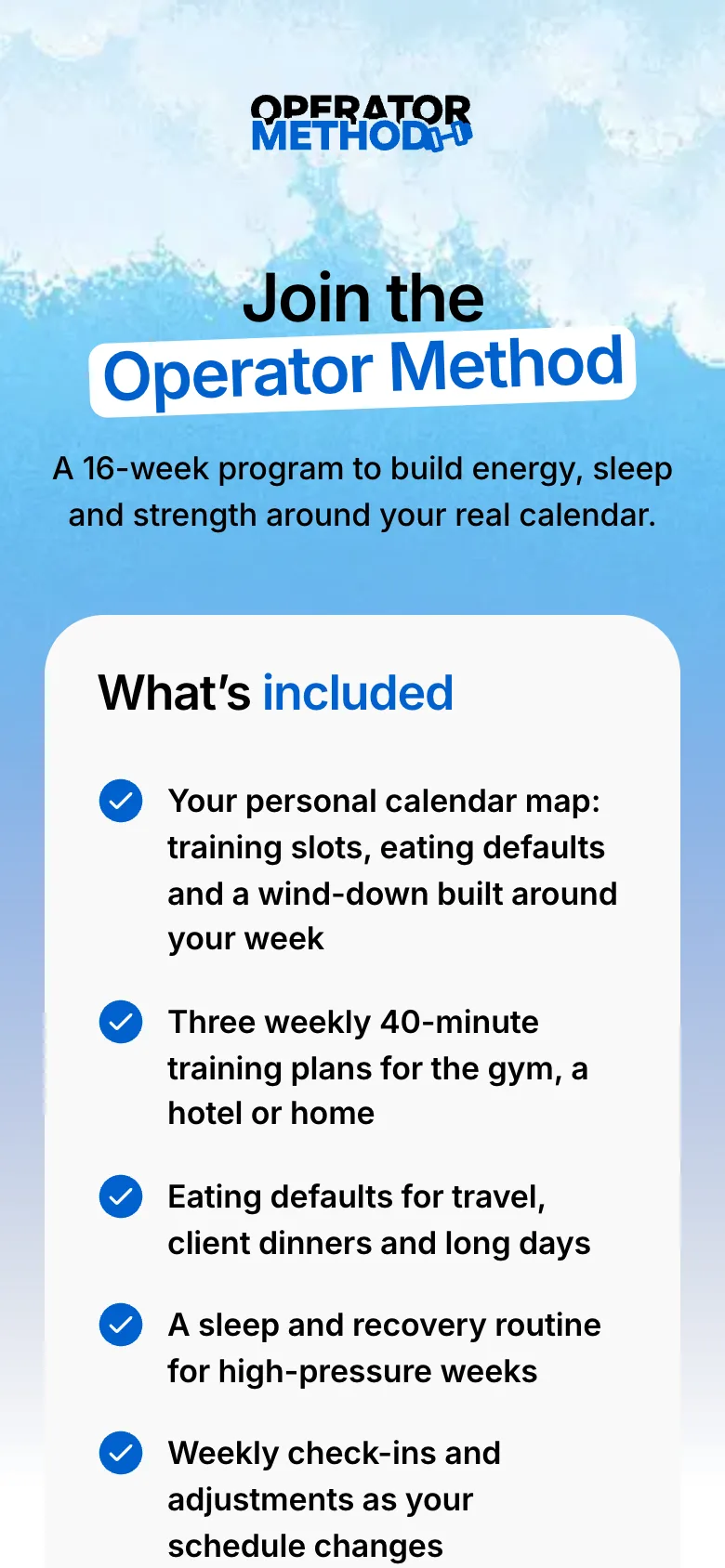
At $3,900 the decision is made on the training or the call. The checkout's only job is to not get in the way.

  • What's included sits next to the price, so the number never stands alone.
  • Three fields. Name, email, phone. Nothing else to think about.
  • One button, one line underneath. No upsells, no timers, no second-guessing.
The checkout page on a tablet
04 · The path

Three pages.
One straight line.

“Save my seat” leads to checkout. “Join the program” leads to the confirmation page. Nothing on any page points anywhere else.

  1. Opt-in page on a phone
    Step 01

    Opt-in

    Fill the seats with the right people

  2. Checkout page on a phone
    Step 02

    Checkout

    Make the $3,900 decision simple

  3. Confirmation page on a phone
    Step 03

    Confirmation

    Get them to show up live

Same program. Same price. A path built for it.

05 · Key takeaways

What this proves,
and what it doesn’t

Filter before you sell

A fit section costs a few opt-ins and saves refunds, bad calls and bad reviews. The people it turns away were never going to buy.

Qualify on the page, not on the call.

The confirmation page is a sales page

For anything sold live, attendance is the conversion that matters. Calendar buttons, a prep task and clear reminders do more than a thank-you ever will.

Show-up is the number to protect.

Boring checkout, on purpose

By the time someone reaches a $3,900 checkout, they've decided. Every extra element on that page is a chance to undecide.

The decision happens before the form.

Final word

This case shows one narrow thing: an offer that sells can still stall on a path that doesn’t sell it.

I’m not publishing the client’s numbers, and I’m not promising yours would match them. What I can show is the path, and why every piece of it is where it is. If you sell through a live training or a call, the useful question isn’t “is my offer good enough?” It’s “where does my path leak?”

Think your path is leaking?

Let’s find where people drop off before you rewrite the offer or buy more traffic.